
The Meaning of Being Alone
Out Stealing HorsesTrond’s retreat tests whether solitude is genuine independence, a refuge from grief, or a condition that can coexist with renewed attachment.
increasing Bearing strength in each event
 decreasing
Bearing strength in each eventdecreasingA Longing Fulfilled
A Longing Fulfilled
The Solitude He Wanted
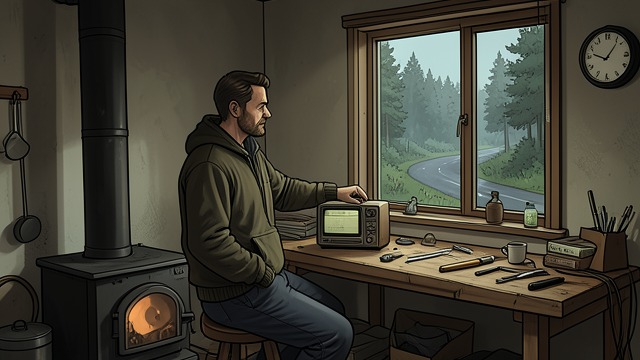
Trond says that he has longed to live in a quiet place even during periods of happiness and intimacy. At The Top, the silence resembles the life he imagined.
A Carefully Shaped Day
He lights the stove, listens to the radio, and works on the house. He wants time to become something he can inhabit rather than something that disappears.
Solitude initially appears as a positive choice, not merely loneliness. But the routines also help Trond keep difficult memories at a manageable distance.
Facts Without Feelings
Facts Without Feelings
A Public Biography
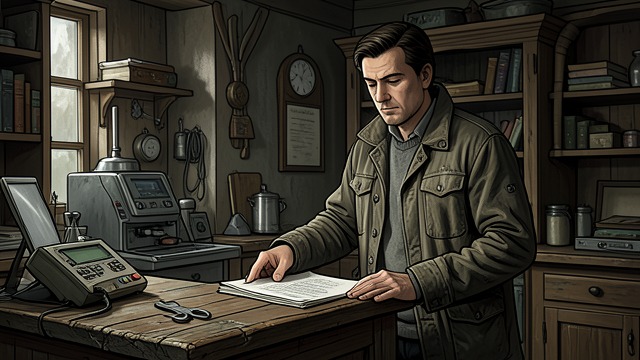
People at the shop learn Trond’s age, work history, marriages, and the deaths that brought him to the forest. He gives information in portions and remains polite.
A Protected Interior
He recognizes that neighbors know facts, not the feelings behind his decisions. Their assumptions create a version of his life that he can leave unchallenged.
Privacy becomes a form of protection, but it also keeps others from understanding him. Trond can be socially present while remaining emotionally inaccessible.
Solitude Feels Like Confinement
Solitude Feels Like Confinement
A Routine Blocked
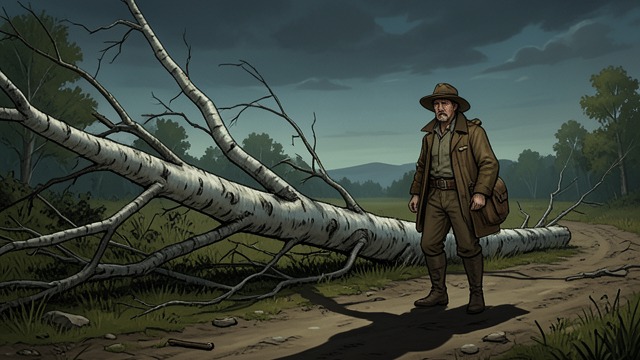
The fallen birch obstructs the yard, car, and woodshed. Trond suddenly feels panicked even though he has food, water, and a place to stay.
The Limits of Control
He recognizes that the practical problem is not a crisis, but his sense of safety collapses. The possibility of dying alone becomes difficult to dismiss.
The episode exposes a contradiction in his plan: he has chosen isolation, yet depends on health and access he cannot fully guarantee. Independence has a physical limit.
Neighborly Dependence
Neighborly Dependence
A Plan for Winter
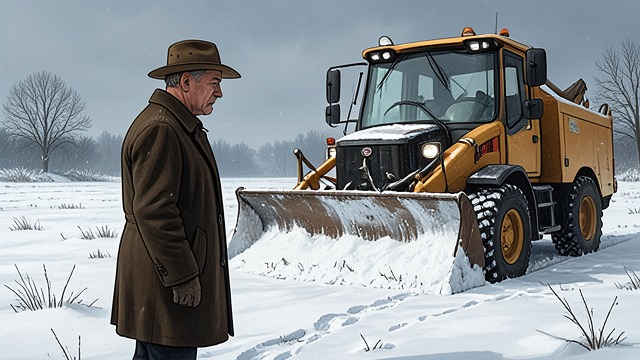
Lars tells Trond how he has arranged for a farmer to clear the road. Trond learns that his own snow-plowing arrangement is already in place.
An Uncomfortable Realization
Trond is surprised that Lars’s confidence helps him return to work. He senses that he is changing from the lucky, self-sufficient man he once believed himself to be.
The exchange suggests that accepting help need not erase independence. A life in the forest may require relationships even when its inhabitant has chosen privacy.
The Door Not Closed
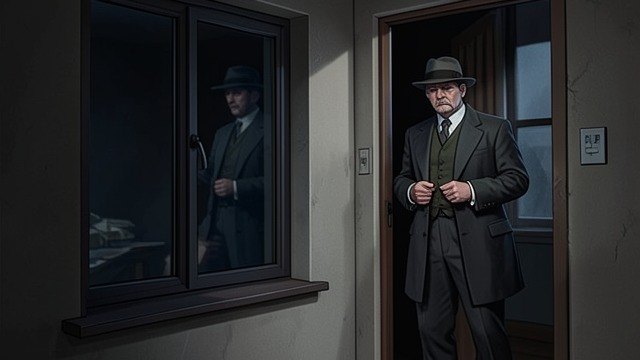
The Door Not Closed
A Changed House
After Ellen drives away, Trond looks into the dark window and sees his reflection. The house feels emptier, but her visit has left its mark.
Connection Without Surrender
Trond has not renounced his plan to live quietly. He has, however, allowed his daughter to know where he is and asked her not to leave.
The ending of the visit holds solitude and attachment together. Trond’s life can remain his own without becoming entirely unreachable.
Early November 1999
During Trond’s first weeks in the village
The morning the birch falls
The first snowfall of 1999
After Ellen departs
